Our History
From Mākaha to the world, and back again.
Founder and CEO
Meet Mel Puʻu
Mel Puʻu is the CEO of the Mauka To Makai Makaha Foundation. He served 35 years as a City and County of Honolulu Ocean Safety Lifeguard, and retired in 2017 as the City's Rescue Water Craft (jet ski) Operator and Trainer.
He holds a Grand Master's Certification in Ocean Safety Education and Training, and a Grand Master's Certification in Rescue Water Craft Training and Operations, both through the University of Hawaiʻi and Windward Community College.
For 2026 to 2027 he serves as a State of Hawaiʻi Department of Land and Natural Resources Rescue Water Craft and Basic Ocean Lifesaving Instructor and Trainer.
A lifetime of ocean safety
In 1991, Mel and his brother Brian Keaulana started the City and County of Honolulu Ocean Safety Rescue Operator Program. Together they developed new techniques for high surf rescues and invented the Rescue Life Sled, which attaches to the back of a rescue water craft.
The brothers wrote rescue water craft training manuals for Hawaiian Water Patrol, Westside Water Patrol and City and County of Honolulu Ocean Safety.
Mel has trained agencies around the world in advanced ocean rescue, and has worked as a Rescue Safety Professional at the Surfing Olympics in Japan, Quiksilver Championship events in France, Ireland, Fiji, Tahiti, New York and Indonesia, the World Surf League in Hawaiʻi, and for the Hawaiʻi film industry.
After retiring, he wanted to share what his career had taught him while honoring what he learned from our kūpuna: knowledge and values that keep proving themselves on the ocean.
2018 to 2019
How the foundation began
The foundation grew out of something very simple: taking care of our community.
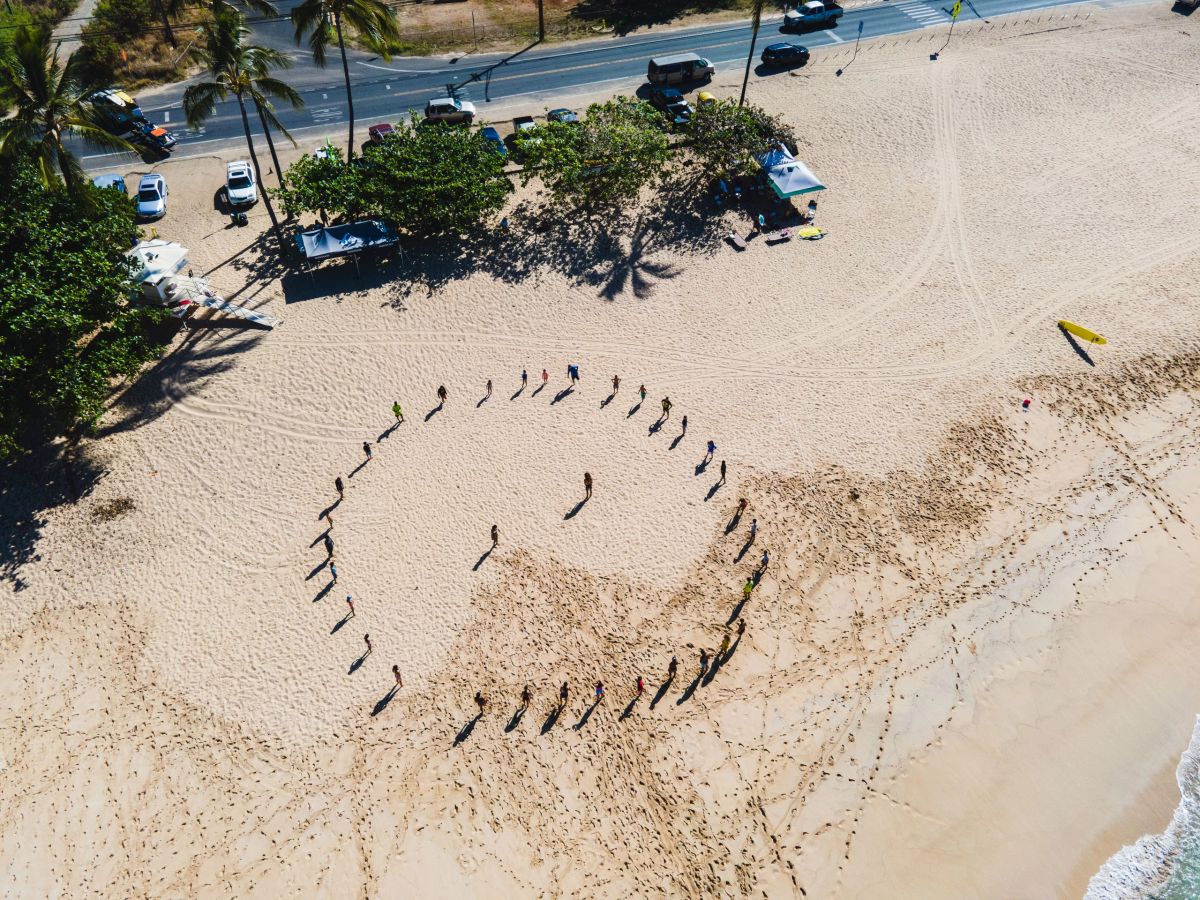
One weekend in 2018, a friend named Carl spent the day with Mel's family at Mākaha Beach. He noticed keiki from the beach kept coming by to ask for something to eat or drink. The family would simply say, "Thank you for asking," and point them to the coolers and tables.
Carl asked if this was a normal way of life at the beach.
"Yes. This is how we take care of our keiki and our community."
Many of the keiki who come to the beach every day don't have much. Some come with family. Others walk down on their own, sometimes with a younger brother or sister, carrying nothing more than a towel. The family let them use boogie boards and surfboards and, most importantly, taught them how to be safe in the ocean.
When Carl asked who paid for the food, drinks and gear, Mel told him his family paid for as much as they could, and when they couldn't, they found another way. Carl suggested a nonprofit to make that support last. Mel agreed, and the Mauka To Makai Makaha Foundation was founded in 2019.
Then COVID hit, and everything stopped.
2021
Bringing Junior Lifeguards back to the West Side
After COVID, Mel came back to Mākaha Beach excited to sign up his own keiki for the City's Junior Lifeguard Program, a program he had helped start in 1991. He learned the City was offering only one week of training on the West Side, while the North Shore, Windward and Town got far more.
The difference was nonprofits: in those districts, they helped run the programs. Mel already had one. He asked Chief of Ocean Safety Kurt Lager whether the foundation could use equipment that was sitting idle and take on more Junior Lifeguard training. The City said yes.
In 2021, the Mauka To Makai Makaha Foundation Junior Lifeguard Training Program began, built on ocean safety, leadership, service, responsibility and community.
Five years of impact
- keiki enrolled
- 600+
- keiki enrolled
- hours of community service
- 1,600+
- hours of community service
- years of Junior Lifeguards
- 5
- years of Junior Lifeguards
- Leeward Coast beaches
- 3
- Leeward Coast beaches
- More than 600 keiki enrolled from the Leeward Coast and across Oʻahu.
- More than 1,600 hours of real community service.
- Advancement programs that train a new generation of leaders.
- Keiki growing in ocean safety, leadership, teamwork, discipline and responsibility.
- Young people who keep leading in their own communities.
2025 honor
Noa "Bubba" Puʻu, age 17, named Duke Kahanamoku Lifesaver of the Year
It's more than one person's achievement. It shows what happens when keiki get steady opportunities, mentorship, training, responsibility and a safe place to learn.
Growing with community support
In 2022, the foundation received a Kamehameha Schools Kaiaʻulu Grant. It paid for program equipment, daily lunches for participants, instructor pay and equipment upkeep.
In 2024, the program grew from Mākaha Surfing Beach to two more summer locations: Pokaʻi Bay and Nānākuli Flats. The goal has always been to bring ocean safety training right into the communities where our keiki live.
Our commitment to safety
We don't just put keiki in the ocean and teach them to swim. They learn surrounded by experienced ocean safety professionals and rescue equipment.
- 1
Drone surveillance
A morning check from the air before anyone enters the water, to read conditions and spot hazards.
- 2
Rescue water craft
A rescue water craft stays in the water whenever keiki are in the ocean.
- 3
Certified operators
Every rescue water craft is run by a certified operator.
- 4
Certified instructors
Keiki are taught and watched by people with advanced open ocean lifesaving training and experience.
"We want our keiki to learn to respect the ocean, not fear it."
We teach them to read conditions, know their own limits, look out for one another and make good choices around the ocean.
What it takes every day
Running safely takes a lot of gear and hands. Here's what comes to the beach each day:
- Rescue water craft (jet ski)
- Rescue boards
- Rescue tubes
- Rescue boogie boards
- Swim fins
- Swim goggles
- Tents
- Buoys
- Sunscreen
- Water coolers
- Anchors
- Tables
- Equipment trailer
- Beach flag rake
- 100 foot water hose
- Sand anchors
- CPR mannequins
- First aid and oxygen kit
- Chairs
Every piece has a job in keeping training safe, organized and professional.
In Mel's words
Growing up at Mākaha
Growing up on Mākaha Beach in the early 60's, 70's and 80's, you understand the meaning of family and how important it is to help one another. Sharing what you have and learning with each other was the way we lived at Mākaha. Listening to the stories told by our kupuna, and deciphering the morals of the stories. Learning about the ever present dangers and risk factors and how to mitigate or eliminate these risks.
This style of living is what was instilled in me at a very young age and I see me in these keiki that come to Mākaha today. It's great to hear the youth sharing surfing stories or diving stories with each other. Having a cooler for the kids when they are done surfing or having some snacks is part of the life style. The uncles and aunties here on the west side always try to take care of the keiki and make sure they are alright. We are always on the look out for the safety of our ʻohana.
I'll try to do my best to keep giving and instilling knowledge to all the keiki and the ʻohana that come to Mākaha Surfing Beach. We want to pass on what we were taught to always Be ALOHA, Give ALOHA, and treat everyone like you want to be treated. Our own kids had to share us with all the beach kids. They still do.
Mel Puʻu